Why I draw directly onto the body - and why I also make some of the most complex stencils I know
There’s a moment in most consultations where I ask a client to stand up.
Not to look at reference images, not to talk through placement - just to stand, naturally, the way they would if they weren’t thinking about it. Because that’s the body I’m designing for. Not the body on a flat page.
Tattooing has a geometry problem that most people don’t think about until it’s too late. A design that looks balanced drawn on paper can pull, distort, or fight against the body the moment it’s applied to skin. The shoulder curves. The ribcage moves with breath. The forearm rotates. A line that sits perfectly still in a sketch rarely sits the same way in motion.
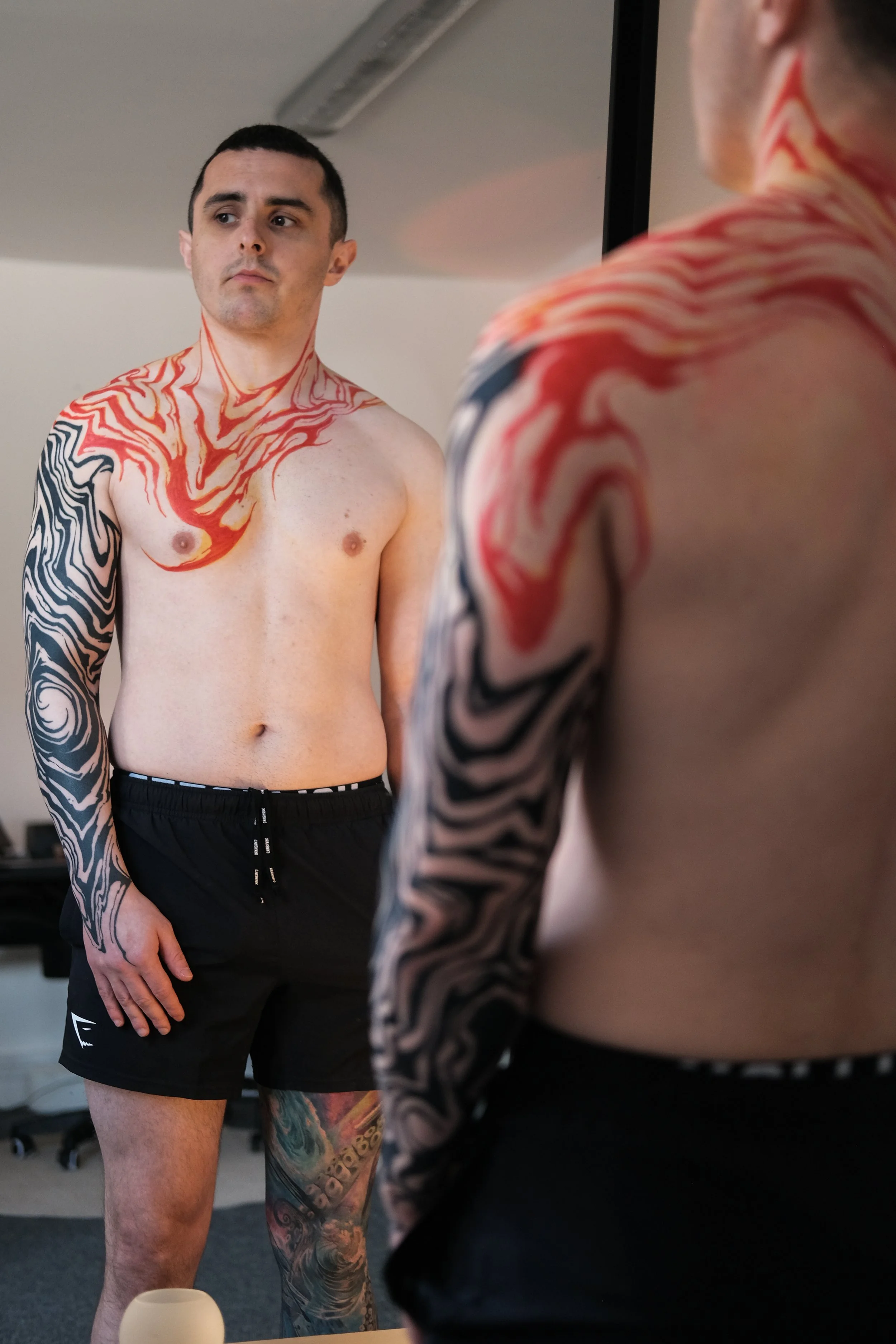
So wherever possible, I skip the paper stage entirely and draw directly onto the body first.
It starts with a conversation about shape, flow, and placement. Then I’ll use a skin-safe marker to sketch directly onto the area - mapping the design around the natural contours rather than trying to force a flat image onto a three dimensional surface. The freedom this gives is hard to overstate. You’re not adapting a design to fit a body, you’re building the design from the body outward. The result feels like it belongs there, rather than something that was placed there.
But freehand drawing is only half of how I work.
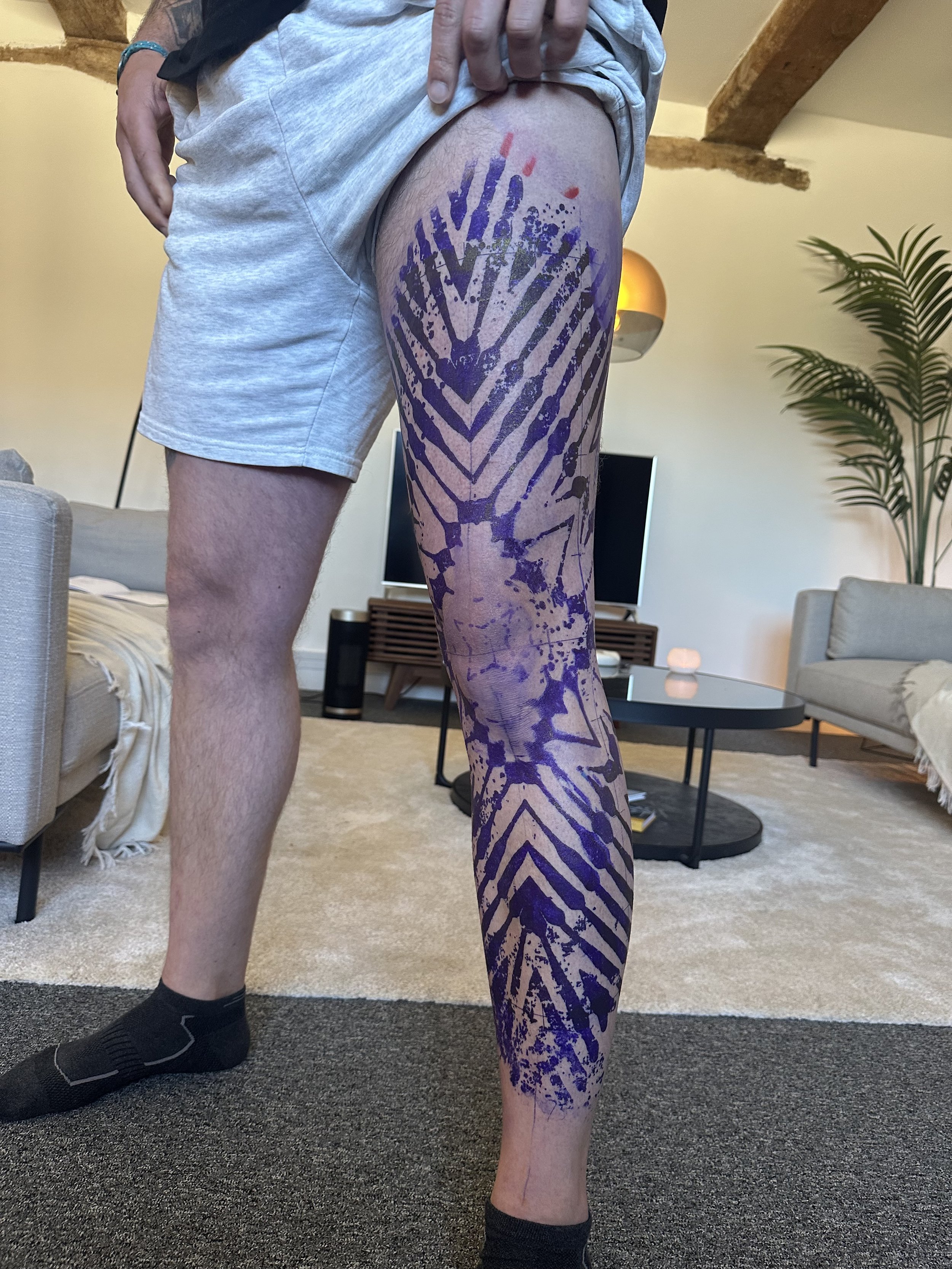
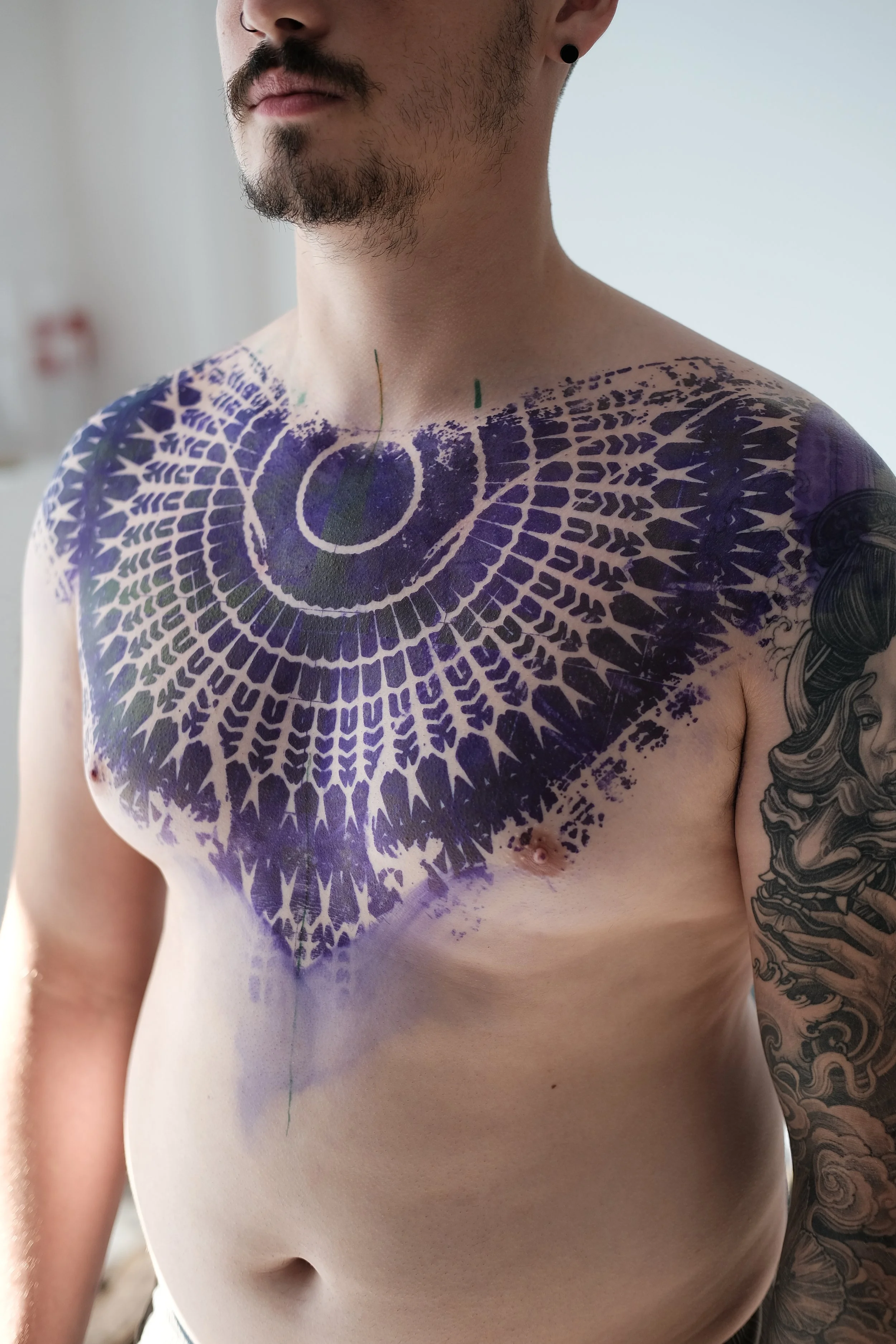
For larger, more technically complex pieces - intricate geometric structures, dense pattern work, precise repeating forms - I also create highly detailed digital stencils. These start as digital drawings, built and refined on screen until every line, angle, and junction is exactly right. Getting them onto the body accurately is genuinely one of the hardest parts of this kind of work, and it’s something I’ve spent years refining. The margin for error is small. A geometric pattern that is even slightly misaligned reads immediately - the eye catches it before the brain does.
The combination of the two is where my work lives. Freehand for flow, feeling, and fit. Digital stencils for precision, complexity, and structure. Neither approach alone gets you there - at least not to the standard I want to work to.
If you’re considering a larger or more complex piece and want to understand more about how the process works, get in touch - the initial consultation is free and it’s always where the best work starts.